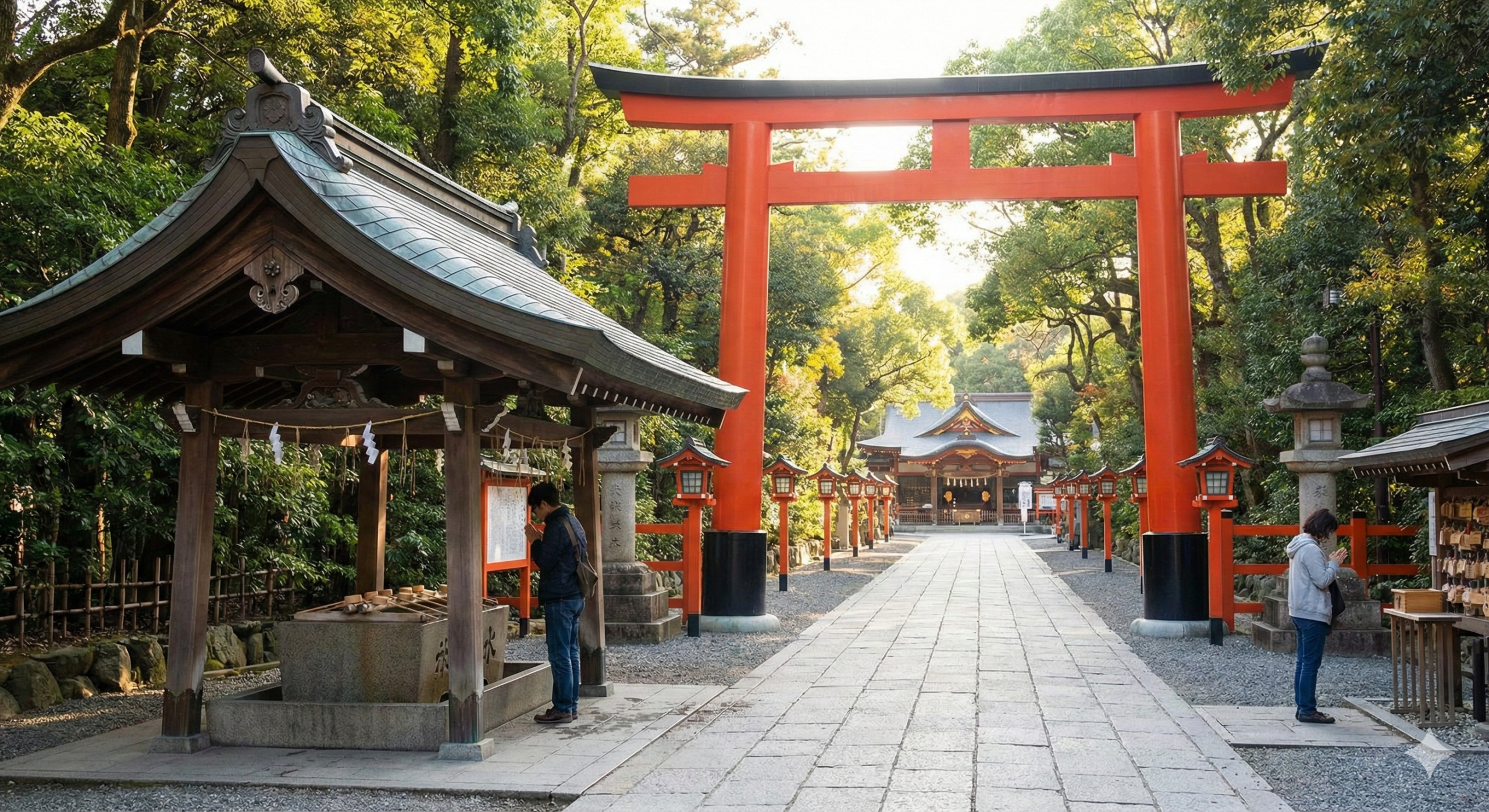
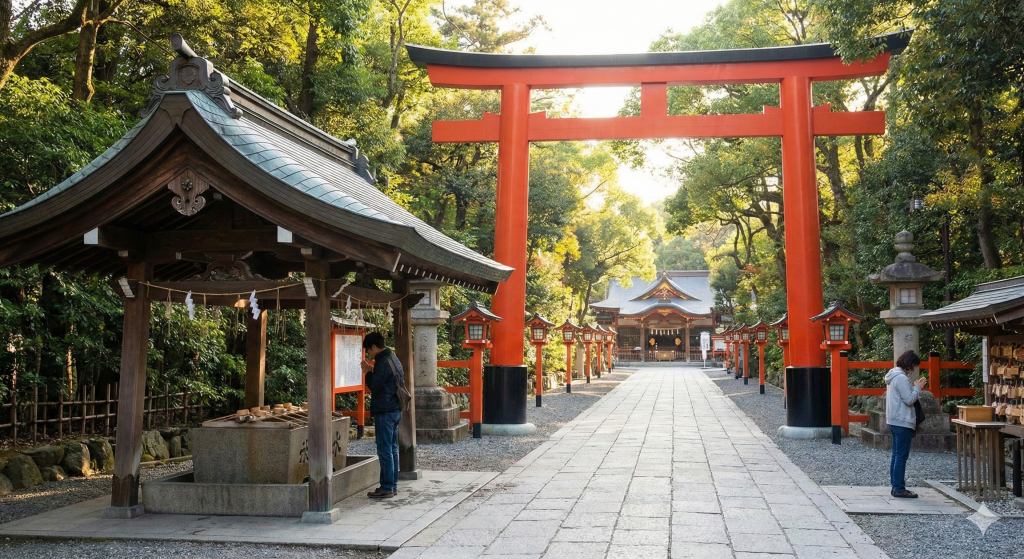
Introduction Visiting shrines (Shinto) and temples (Buddhist) is a highlight for many travelers in Japan. These sacred places offer peace, history, and beautiful architecture. While they are open to everyone, there are certain manners to observe to show respect. This article explains the basic etiquette for visiting both shrines and temples.
The Difference Between a Shrine and a Temple First, it helps to know the difference.
- Shinto Shrines (Jinja): Identified by a Torii gate (often red) at the entrance. They are dedicated to Shinto gods (Kami).
- Buddhist Temples (Otera): Identified by a large Sanmon gate and often have statues of Buddha. They are places of Buddhist worship. While the manners are similar, the way you pray is slightly different.
Step 1: Entering the Sacred Ground Before entering, stop and bow once in front of the gate (Torii or Sanmon). When walking along the approach (path), try to walk on the side of the path. The center is considered the path for the gods.
Step 2: Purifying Yourself (Temizu) You will find a water pavilion called “Temizuya” before the main hall. This is to symbolically purify your body and mind. How to do it:
- Take the ladle with your right hand, scoop water, and wash your left hand.
- Switch the ladle to your left hand and wash your right hand.
- Switch again to your right hand, pour some water into your left cupped hand, and rinse your mouth (do not drink directly from the ladle).
- Rinse your left hand again.
- Finally, tilt the ladle vertically to rinse the handle with the remaining water, and place it back.
Step 3: Praying at the Main Hall Approach the main hall quietly. If there is a bell, you may ring it first to greet the deity. Then, gently toss a coin into the offering box (Saisen-bako).
At a Shinto Shrine (2 Bows, 2 Claps, 1 Bow):
- Bow deeply twice.
- Clap your hands twice. (Keep your hands together and pray siliently after the second clap).
- Bow deeply once more.
At a Buddhist Temple (Silent Prayer):
- Put your hands together silently in front of your chest. Do not clap.
- Bow slightly and say your prayer silently.
Summary While these steps might seem complicated, the most important thing is to show respect. Feel free to draw an “Omikuji” (fortune slip) or buy an “Omamori” (charm) after your prayer. Enjoy the peaceful atmosphere of Japan’s sacred sites.
日本語訳|Japanese Translation(簡潔版)
はじめに 神社(神道)とお寺(仏教)への参拝は、日本旅行のハイライトです。 誰でも歓迎されますが、敬意を表すための基本的なマナーがあります。
神社とお寺の違い
- 神社(Jinja): 入り口に鳥居(多くは赤色)があります。
- お寺(Otera): 大きな山門や仏像があります。 参拝方法は少し異なります。
ステップ1:入場 門の前で一度お辞儀(一礼)をします。 参道は、真ん中ではなく端を歩きましょう(真ん中は神様の通り道とされています)。
ステップ2:清める(手水) 本殿の前に「手水舎」があります。 やり方:
- 右手で柄杓を持ち、左手を洗う。
- 左手に持ち替え、右手を洗う。
- 右手に持ち替え、左手に水を受けて口をすすぐ(柄杓に直接口をつけない)。
- もう一度左手を洗う。
- 最後に柄杓を立てて、残った水で柄を洗い流して元に戻す。
ステップ3:参拝する お賽銭を静かに入れます。
神社の場合(二礼二拍手一礼):
- 深く2回お辞儀をする(二礼)。
- 2回手をたたく(二拍手)。手を合わせたまま祈る。
- 最後にもう一度深くお辞儀をする(一礼)。
お寺の場合(静かに合掌):
- 胸の前で静かに手を合わせる。拍手は打たない。
- 軽くお辞儀をして祈る。
まとめ 作法は大切ですが、最も重要なのは敬意を払う心です。 参拝後はおみくじやお守りを楽しんでください。
You may also find it helpful to read our guide on general Japanese etiquette. For more information, visit the Japan National Tourism Organization website.